If you want a farm property that feels private and purposeful without being truly remote, Thompson’s Station deserves a close look. Many buyers are trying to find that rare middle ground: enough land for a boutique farm lifestyle, but still within reach of Franklin, Spring Hill, and Nashville. In Thompson’s Station, that balance is not just a lifestyle story. It is also reflected in local planning, land use, and the way the town talks about its future. Let’s dive in.
Why Thompson’s Station stands out
Thompson’s Station sits in southern Williamson County, roughly 25 to 30 miles south of Nashville and between Franklin and Spring Hill. The town describes its identity through a “Town meets Country” framework, which helps explain why it appeals to buyers who want land, privacy, and a more rural setting without losing access to daily conveniences.
That positioning matters if you are looking for a boutique farm rather than a large production property. You are not simply buying acreage. You are buying into a place that is actively trying to manage growth while preserving rural and historic character.
The town’s growth also helps tell the story. Census estimates place Thompson’s Station at 9,469 residents in July 2025, up 27.2% from the 2020 census count of 7,485, with an 81.3% owner-occupied housing rate and a median owner-occupied home value of $700,500.
For boutique farm buyers, those numbers suggest an established and upscale ownership base. They also help explain why Thompson’s Station often attracts buyers who value long-term land stewardship, not just short-term speculation.
Why planning matters for farm buyers
One of the strongest signals in Thompson’s Station is that preservation is part of the official conversation. The town’s All Aboard planning process was adopted in March 2023 to guide growth while preserving historic and environmental features, and the plan later received a 2024 Tennessee APA award for Outstanding Plan in the small jurisdiction category.
In late 2025, the town said it was revisiting that plan with continued focus on preservation. That does not mean every parcel will fit every vision, but it does show that managed growth and rural character remain active priorities.
For you as a buyer, that matters because policy shapes experience. If your goal is a mini-farm, equestrian setup, or carefully planned land investment, it helps to be in a place where open land and rural identity are part of the public framework.
What types of boutique farms fit here
Small-acreage homesteads
Thompson’s Station can make sense for buyers seeking small-acreage homesteads and mini-farms. The town’s General Plan describes its rural placetype as an agricultural or rural setting with few single-family homes on lots greater than one acre.
Williamson County’s countywide plan adds another helpful layer. Outside Municipal Growth Areas, the county says density should generally be one unit per five acres, except in designated hamlets or villages.
Together, those planning documents support the idea that small-acreage ownership and hobby-farm use still align with the area’s land-use vision. If you want gardens, a barn, open pasture, or simply more breathing room, Thompson’s Station has a framework that can support that kind of ownership.
Equestrian properties
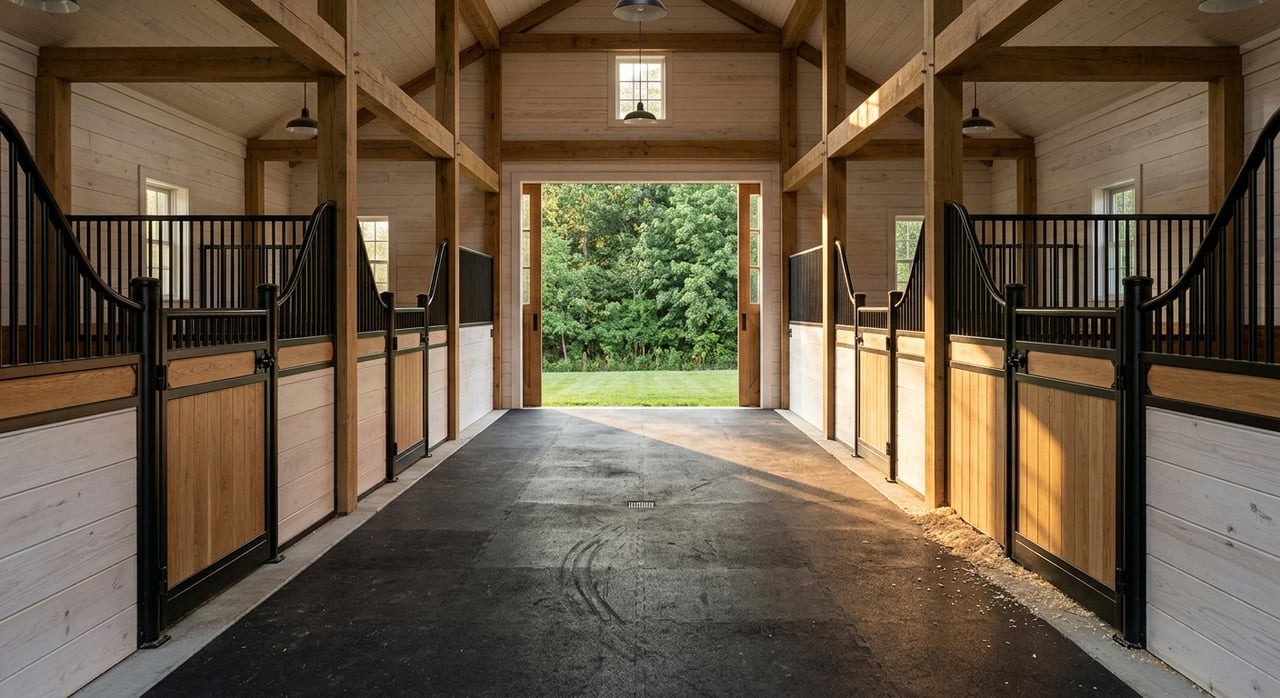
For equestrian buyers, Williamson County is especially relevant. The county’s Comprehensive Plan says agriculture and equestrian uses are encouraged to continue in rural areas, and the zoning ordinance’s Voluntary Agricultural District is intended to support uses tied to the rural economy, including agriculture, horticulture, and animal husbandry.
There is an important practical limit, though. The county zoning ordinance says equestrian facilities require a minimum lot area of 15 acres.
That means not every pretty farm parcel will work for horses in the way you might hope. A tract may feel rural and still fall short of the acreage or zoning requirements needed for a true equestrian setup.
Vineyard and farm-winery potential
If your vision leans toward vines, a tasting-oriented farm concept, or a long-range agricultural project, Thompson’s Station can be worth exploring carefully. Williamson County zoning allows farm wineries on sites of at least 15 acres.
But site selection is everything. According to UT Extension, grapes can be viable in Tennessee when the site has full sun, higher elevation relative to surrounding land, east-facing exposure, well-drained soils, rooting depth of 30 to 36 inches, and a soil pH between 6.0 and 6.5.
UT Extension also notes that highly fertile soils are not ideal, and that American and French-American hybrid grapes are generally better suited to Tennessee’s humid conditions than many traditional wine grapes. In other words, a vineyard vision may be realistic here, but only on the right land.
The location advantage
A boutique farm works best when your day-to-day life still feels manageable. Thompson’s Station offers that key advantage because of where it sits in Williamson County.
You are positioned between Franklin and Spring Hill, with Nashville within a reasonable regional commute. For many buyers, especially those relocating from denser metro areas, that creates an appealing blend of access and separation.
At the same time, commute reality still matters. The town’s Major Thoroughfare Plan says traffic volumes range from a little over 1,000 vehicles per day on Thompson’s Station Road west of I-840 to more than 20,000 on Columbia Pike north of Thompson’s Station Road.
The same plan says most roads currently operate at acceptable levels of service, but Columbia Pike, Thompson’s Station Road, Lewisburg Pike, and I-65 are expected to face more congestion by 2045 if improvements do not keep pace. TDOT is also pursuing a Columbia Pike and Highway 31 widening from Franklin through Thompson’s Station toward Spring Hill.
That means one parcel may live very differently from another. A back-road tract can offer a more tucked-away experience, while a property near a major corridor may trade some privacy for convenience and easier access.
Land conditions can make or break a purchase
Rolling terrain is beautiful and practical
The town describes Thompson’s Station as a place of rolling hills and pastoral countryside. That scenery is part of the appeal, but it also affects how a property functions.
Slope, drainage, and usable ground matter if you are thinking about barns, fencing, gardens, vines, or equipment access. Steeper slopes can increase runoff and erosion risk, and they may also limit machinery use.
Soil and drainage need tract-level review
It is easy to assume that if one property nearby worked well for a farm use, another one will too. That can be a costly mistake.
The research is clear that site conditions should be reviewed at the parcel level. NRCS recommends using Web Soil Survey for tract-specific soil information rather than assuming one soil profile applies across the whole town.
For vineyard buyers especially, UT Extension guidance favors elevated, well-drained ground where cold air can drain away. For any boutique farm buyer, that reinforces the same lesson: the land itself has to support the vision.
Jurisdiction is one of the first things to verify
This is one of the most important due diligence points in Thompson’s Station. The parcel’s jurisdiction should be confirmed early because Thompson’s Station has its own Land Development Ordinance and official zoning map, while unincorporated Williamson County follows county zoning.
That distinction matters when you start thinking about barns, accessory structures, tasting rooms, or future subdivision potential. Town and county properties do not move through the same review and regulatory framework.
If you are comparing multiple parcels, this is not a small technical detail. It can meaningfully shape what is possible and how much time and planning will be required.
Greenbelt can matter for long-term holding costs
For some boutique farm buyers, tax treatment is part of the strategy. Williamson County’s Greenbelt Program allows qualifying land to be taxed based on present use instead of market value.
For agricultural classification, the parcel must have at least 15 contiguous acres, be actively engaged in agricultural activity, and the application is due by March 15. The county also notes that a new owner must reapply for greenbelt, and rollback taxes can apply if the land later stops qualifying.
That does not make every 15-acre parcel a greenbelt property automatically. It does mean that if your purchase includes a legitimate agricultural use plan, greenbelt should be part of the early conversation.
Septic and access deserve early attention
A beautiful tract can still present real infrastructure challenges. Williamson County’s sewage-disposal department manages placement of onsite septic systems, and TDEC notes that alternative septic systems may be needed when soil or site conditions are not favorable for conventional systems.
For buyers, this is why design ideas should not race too far ahead of due diligence. Before you get attached to a barn layout, guest structure, or future homesite, it is wise to confirm septic feasibility, road access, and the physical constraints of the land.
The town notes that its incorporated area contains more than 75 miles of roadways, with state or county entities maintaining major routes like I-65, I-840, State Route 6, and State Route 106. In practice, ingress and egress can vary widely from tract to tract, especially between arterial corridors and quieter back-road parcels.
Lifestyle still plays a big role
A boutique farm purchase is rarely just about utility. It is also about how you want life to feel.
Thompson’s Station supports that with a strong outdoor identity. The town says it has more than 300 acres of parkland and miles of trails, including Preservation Park at roughly 200 acres, plus Nutro Dog Park and a greenway system intended to connect major subdivisions, schools, parkland, and Town Center.
For many buyers, that reinforces the area’s broader character. Thompson’s Station is not simply growing outward. It is also investing in open land, trails, and everyday access to nature.
That kind of setting often resonates with buyers who want a more grounded lifestyle, whether that means a garden, a small horse property, a future vineyard site, or simply a home on land that feels connected to the landscape.
Why this market suits boutique buyers
Thompson’s Station works for boutique farm buyers because it offers a compelling mix of access, policy support, and lifestyle alignment. You can find a setting that still respects rural character, while staying close to the larger Williamson County orbit.
Just as important, the area rewards careful buyers. The best opportunities here are not only about finding acreage. They are about finding the right combination of jurisdiction, zoning, road access, septic feasibility, slope, soils, and long-term fit for your goals.
If you are considering a farm, equestrian property, or land purchase in Williamson County, a measured and property-specific approach can make all the difference. For discreet guidance on boutique farm and lifestyle properties in Thompson’s Station and beyond, connect with Jamie Parsons.
FAQs
What makes Thompson’s Station appealing for boutique farm buyers?
- Thompson’s Station offers a rural-meets-convenient setting, local planning that emphasizes preservation, and a land-use framework that can support small-acreage and lifestyle-oriented farm ownership.
Can you keep horses on a Thompson’s Station area property?
- In the county rural framework, equestrian uses are encouraged in rural areas, but equestrian facilities require at least 15 acres under the county zoning ordinance.
Is Thompson’s Station suitable for a small vineyard?
- It can be, but only on the right site, with factors like sun exposure, elevation, drainage, soil depth, and soil pH reviewed carefully.
What should you check before buying land in Thompson’s Station?
- Start with jurisdiction, zoning, road access, septic feasibility, greenbelt eligibility, and tract-specific soil and slope conditions.
Does parcel location matter within Thompson’s Station?
- Yes, because access, traffic exposure, privacy, and road conditions can vary significantly between properties near major corridors and those on quieter back roads.