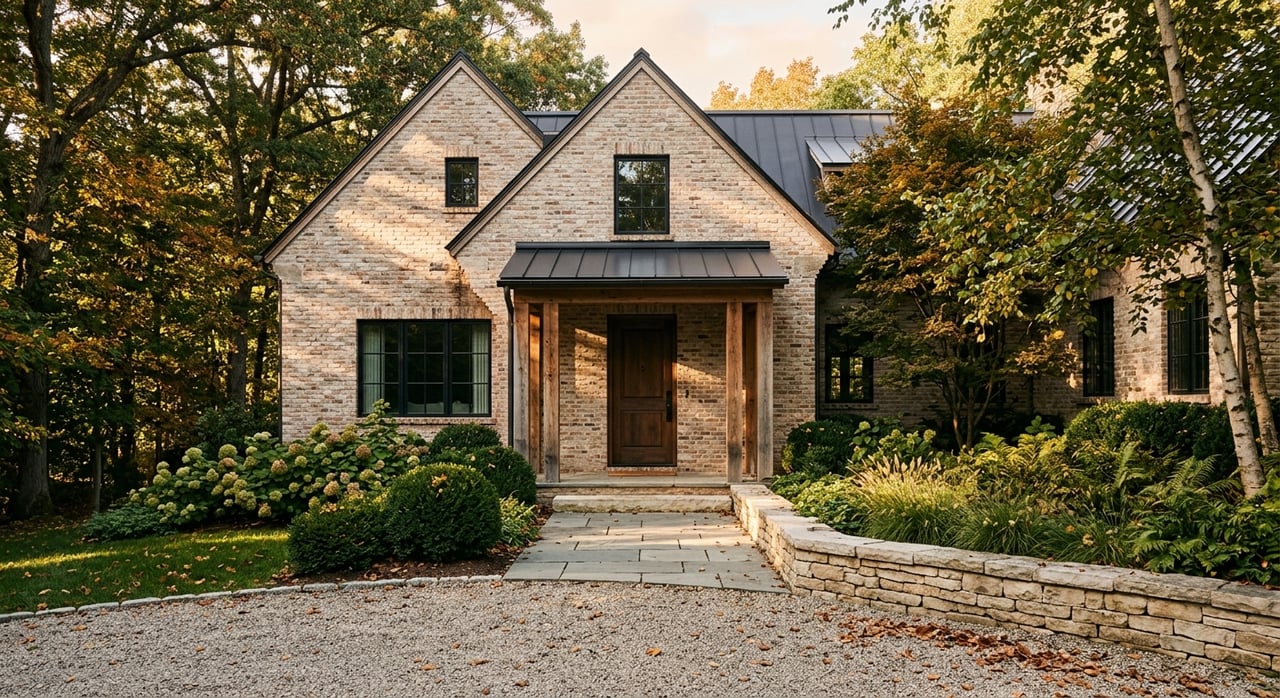
If wooded privacy is high on your list, choosing between Forest Hills and Oak Hill can feel surprisingly nuanced. Both communities offer a quiet, residential setting in south Nashville, but they do not deliver that lifestyle in exactly the same way. If you are weighing estate feel, lot size, preservation rules, and daily access patterns, this guide will help you compare them with more clarity. Let’s dive in.
Forest Hills and Oak Hill at a Glance
Forest Hills and Oak Hill share an important starting point: both are residential-first communities with very limited or no commercial activity inside their boundaries. Forest Hills describes itself as almost exclusively residential, with no commercial development and no high-density housing. Oak Hill describes itself as completely residential with no commercial establishments, and its residential zones are centered on single-family dwellings.
For you as a buyer, that means both places tend to feel quiet, established, and separate from the busier retail patterns found elsewhere in Nashville. You are not choosing between an urban village and a secluded enclave. You are choosing between two versions of low-density luxury living.
Forest Hills: Estate Scale and Hillside Character
Forest Hills tends to feel more uniformly estate-like. Its residential zoning ranges from 1 acre to 6 acres minimum lot sizes, depending on the district, which supports a consistently spacious land pattern across much of the city. That larger-lot framework is a big reason the area often reads as wooded, private, and substantial.
The natural setting is also central to Forest Hills’ identity. The city emphasizes tree-covered hills as part of its character, and its hillside protection overlay is designed to preserve trees and steep slopes. If you are drawn to mature landscaping, elevation changes, and homes that feel tucked into the land, Forest Hills may stand out quickly.
Forest Hills is also a built-out community rather than a place defined by large amounts of remaining open land. The city notes that hundreds of dwellings have been built since 1970 and that it no longer retains many tracts of open space or farmland. In practical terms, that creates a more established luxury setting with a strong sense of continuity.
What the homescape often feels like
Forest Hills developed as a postwar suburb, and that history shows up in the housing mix. You can find older ranch and midcentury forms alongside larger custom homes and estate lots. That blend gives the area a lived-in, layered quality rather than a master-planned look.
For some buyers, that is a major plus. If you appreciate wooded lots, one-level living options, renovation potential, and custom homes with privacy, Forest Hills offers a compelling mix. It feels refined without feeling overly uniform.
Oak Hill: Protected Residential Living
Oak Hill also delivers privacy and low-density living, but its personality is a little different. The city is entirely residential, and its zoning framework centers on single-family homes across six main residential zones. While lot sizes range more widely on paper, from 10,000 square feet to 4 acres, the city requires that existing lots that are subdivided or recombined must still result in lots of at least 2 acres.
That rule matters because it reinforces Oak Hill’s resistance to densification. You may see more variation from street to street than you would in Forest Hills, especially where legacy lots exist, but the overall direction remains firmly low-density. If you value a highly controlled residential setting, Oak Hill has strong appeal.
Oak Hill also has a stronger preserved-natural-area anchor. Its planning process reviews steep-slope work and projects in the Radnor Lake impact zone, and the city has updated lighting rules with dark-sky regulations. Together, those controls support a carefully managed, quiet environment.
What the homescape often feels like
Oak Hill’s recent market examples point to a custom-home market rather than a subdivision-driven one. Renovated ranches, traditional custom homes, and manor-inspired estates all appear in the housing mix. Some properties also show features like guest houses, porches, fruit trees, and equestrian-style elements.
If your taste leans toward classic estate architecture and a more tightly preserved residential atmosphere, Oak Hill may feel especially appealing. It is quiet and private, but with a slightly more regulated feel than Forest Hills. That can be reassuring if long-term preservation is part of your decision.
Lot Sizes: Where the Difference Becomes Real
When buyers compare these two communities, lot size is often the easiest way to understand the lifestyle difference. Forest Hills is generally the more consistently estate-scaled option. Its zoning structure makes larger parcels a defining part of the experience, not just an occasional feature.
Oak Hill has more variety in its lot pattern, especially because smaller legacy lots still exist. Even so, the city’s current rules continue to push toward larger residential outcomes and away from new density. So while Oak Hill is not dense by any measure, it may feel a bit less uniformly estate-sized than Forest Hills.
Here is a simple way to think about it:
- Forest Hills often feels more consistently large-lot and estate-like
- Oak Hill often feels more varied by street, but still strongly low-density
- Both support privacy, single-family living, and a quiet residential rhythm
Preservation and Development Controls
If preservation matters to you, both cities take it seriously, but they emphasize different things. Forest Hills puts a strong focus on topography, mature trees, and hillside protection. That creates a sense that the landscape itself is part of the luxury.
Oak Hill feels more explicitly regulated in day-to-day planning terms. Reviews for steep slopes, Radnor Lake impact-zone projects, and dark-sky lighting standards all point to a city that actively manages how development interacts with its natural setting. If you want a community where preservation rules are especially visible and structured, Oak Hill may have the edge.
This is one of the clearest distinctions between the two. Forest Hills feels wooded and established. Oak Hill feels protected and tightly preserved.
Daily Access and Errands
Neither city is designed around neighborhood shopping. Because both are residential-only or nearly so, daily errands generally route outward to nearby commercial corridors.
In Forest Hills, the location pattern is closely tied to Hillsboro Pike. That makes the area a natural fit if you want a wooded residential setting with a Hillsboro Pike-oriented routine. The flow feels direct and familiar for buyers who already spend time in the Green Hills and south Nashville area.
Oak Hill connects differently. Its boundaries include roads such as Old Hickory Boulevard, Woodmont Boulevard, Granny White Pike, and I-65, which creates access through multiple south Nashville routes. If you prefer being positioned between several corridors rather than oriented mainly around one, Oak Hill may suit you better.
Which Setting Fits Your Lifestyle?
The right choice depends less on price point alone and more on the kind of luxury living you want to feel every day. If you picture a home set into mature trees, with hillside drama, larger estate parcels, and an established residential backdrop, Forest Hills may align more naturally. It tends to tell a strong quiet-luxury story through land, topography, and privacy.
If you picture a highly protected residential environment with strong preservation controls, a custom-home feel, and access to several major routes, Oak Hill may be the better fit. It offers privacy too, but with a slightly more structured and preservation-driven identity.
A simple way to frame it is this: Forest Hills feels a little more estate-like and topographically dramatic, while Oak Hill feels a little more tightly preserved and residentially controlled. Both are compelling. The better choice depends on which version of wooded luxury feels most like home to you.
If you are considering a move in south Nashville and want thoughtful guidance on privacy, land, and long-term fit, Jamie Parsons offers a discreet, high-touch approach tailored to distinctive properties and lifestyle-driven decisions.
FAQs
What is the main difference between Forest Hills and Oak Hill for luxury buyers?
- Forest Hills generally feels more consistently estate-sized and hillside-oriented, while Oak Hill feels more tightly preserved, more regulated, and somewhat more varied from street to street.
Are Forest Hills and Oak Hill both low-density communities?
- Yes. Both communities are centered on low-density, single-family residential living, with little or no commercial development inside their boundaries.
Does Forest Hills usually have larger lots than Oak Hill?
- In general, yes. Forest Hills zoning runs from 1 acre to 6 acres minimum lot sizes, which tends to create a more uniformly estate-like pattern.
Is Oak Hill less private than Forest Hills?
- Not necessarily. Oak Hill still offers a quiet, low-density setting, but its lot pattern can feel more varied even as the city strongly resists new densification.
Which area has stronger preservation controls, Forest Hills or Oak Hill?
- Both prioritize preservation, but Oak Hill has especially visible controls tied to steep slopes, the Radnor Lake impact zone, and dark-sky lighting regulations.
Is Forest Hills or Oak Hill better for daily access to Nashville routes?
- It depends on your routine. Forest Hills is more closely associated with Hillsboro Pike access, while Oak Hill is positioned around multiple routes including Old Hickory Boulevard, Granny White Pike, Woodmont Boulevard, and I-65.