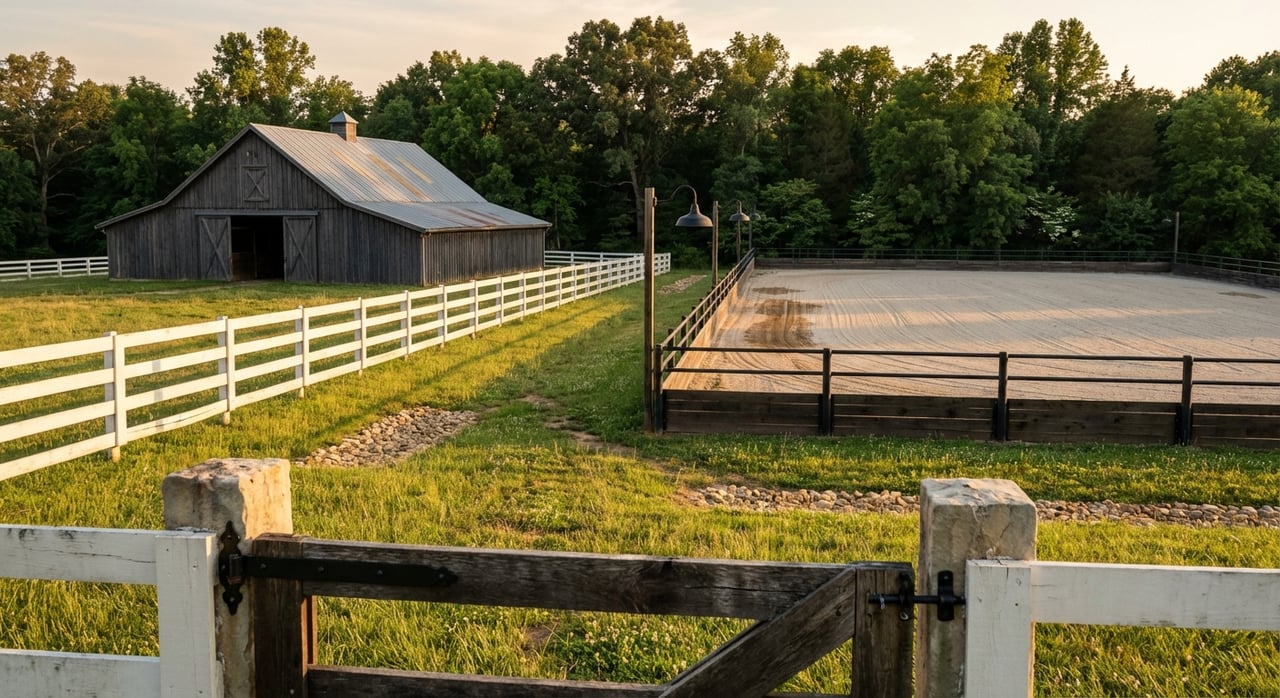
Ever dream of saddling up at sunrise and riding straight from your own barn onto a quiet country trail? If you are drawn to acreage, privacy, and authentic Tennessee countryside, Leiper’s Fork delivers that lifestyle with easy access to Franklin and Nashville. In this guide, you will learn how to evaluate horse-friendly land, barns, arenas, utilities, and permits unique to Williamson County, plus real costs and a smart due diligence plan. Let’s dive in.
Why Leiper’s Fork works for horse owners
Trail access and location
Leiper’s Fork sits beside the Natchez Trace Parkway, where the Highland Rim section offers roughly 25 miles of bridle trails nearby. For trail riders, that access is a standout amenity, and it is hard to replicate elsewhere in Middle Tennessee. You get country quiet and convenience in the same package, with central Franklin typically 10 to 20 minutes away depending on the parcel.
Explore Natchez Trace horseback riding options to see how close many Leiper’s Fork properties sit to those trailheads.
Market snapshot
Leiper’s Fork is a micro-market built around acreage, scenery, and equestrian use. Recent activity has skewed toward estate-level pricing, with many sales in the low to mid millions and frequent 5-plus-acre offerings. Representative examples in the area have included a mid-sized hobby-farm sale on roughly 16 acres around 1.5 million, 30-plus-acre tracts in the mid 2 million range, and larger 60 to 100-plus-acre estates trading higher. In short, you are buying land, privacy, and equestrian access as much as the house.
What to look for on the land
Acreage and pasture planning
A conservative rule of thumb is to plan on about 2 to 3 acres of workable pasture per mature horse. Rotational grazing, soil fertility, and hay supplementation can shift that number, but it is a helpful baseline for private barns and small programs. If you plan boarding or breeding, increase acreage and consider on-site hay production or reliable supply contracts. Review a pasture plan with a soils consultant or county extension resource before you buy.
For a quick primer, see this overview of pasture management and stocking basics.
Floodplain, zoning, and permitted use
Start every short list with a parcel check. Confirm the zoning district, setbacks, and any floodplain overlays with Williamson County’s official tools. The county’s parcel viewer and planning staff can flag overlays or amendments that affect barns, arenas, or future lot changes.
- Review the Williamson County Zoning Ordinance.
- Use the county official maps and parcel viewer for floodplain and zoning lines.
Tennessee limits certain county permits for agricultural buildings on land devoted to agricultural uses, but floodplain and safety rules still apply. If you plan a new barn, indoor arena, or spectator areas, call county planning and floodplain staff early to confirm what triggers permits or review.
Greenbelt tax status
Tennessee’s Greenbelt program allows qualifying agricultural, forest, or open-space land to be assessed at current use rather than market value. That can reduce annual taxes, but there are rollback provisions if the land leaves qualifying use. If you expect to operate as agricultural or equine and want the tax benefit, contact the county assessor during due diligence and confirm documentation and eligibility.
Learn the basics in the state’s overview of Greenbelt and property assessment terms.
Barns, arenas, and fencing essentials
Barn checklist for private programs
Well-planned barns make daily work safer and more efficient. As you tour, verify:
- Stall sizes that fit your horses and program, often 12 by 12 feet or larger for sport horses.
- Separate, secure tack and feed rooms with good ventilation.
- A wash stall with hot and cold water and proper drainage.
- Electrical and lighting in safe condition, plus clear aisleways.
- Dedicated long-term hay storage separate from stalls for fire safety.
Freshly baled hay that is too wet can heat and self-ignite. Review insurer requirements, and if you store your own hay, follow extension guidance on monitoring bale moisture and temperatures. See this practical overview on minimizing hay heating and fire risk.
Arena construction and footing
A good arena starts below the surface. Typical builds use a compacted subbase, a 4 to 6 inch engineered base, and a 2 to 6 inch footing layer, with drainage that moves water away from the riding surface. Expect regular grooming and dust control, plus periodic resurfacing every few years and deeper rework roughly every 5 to 10 years depending on use.
For construction fundamentals, review this concise arena design and maintenance reference. Footing blends vary by discipline, climate, and budget. Plan on a site visit with a local arena builder to price drainage and base work, which often drive more cost than the footing itself.
Fencing choices and safety
Fence quality is a safety issue and a budget line. Inspect post spacing and depth, bracing, visibility, and fasteners. Wood post-and-rail, vinyl rail, high-tensile, and pipe systems appear across Williamson County. Wood often has lower material cost but higher long-term maintenance. Vinyl and pipe can raise the upfront cost while lowering upkeep. Age, installation quality, and soil conditions matter as much as material type.
Septic, wells, and utilities
Most rural parcels rely on on-site septic and private wells. Before you assume you can add stalls, an apartment, or a guest house, pull septic records, confirm perk capacity, and test well yield and water quality. Order independent inspections during your contingency period and verify any recorded easements for utility access. If documents are missing, make them a condition of closing.
Use this quick reference when requesting records and permits for septic and private well information in Tennessee.
Due diligence timeline and team
Quick checks before you write an offer
- Confirm zoning, setbacks, and permitted uses with the county. Map any floodplain overlays on the parcel.
- Request recorded septic and well documents, utility easements, and any approvals for prior improvements.
- Ask for ages and as-builts on barns, arenas, fencing, and a summary of pasture or hay production history.
Specialists to engage
- Equestrian-savvy real estate advisor experienced with farm and equine sales.
- Equine veterinarian to consult on facility design, fescue management, and pre-purchase exams if horses convey.
- Structural or barn inspector to evaluate roofs, beams, electrical, and life safety.
- Soils consultant or county extension resource to review pasture productivity, erosion, and drainage.
- Licensed septic designer and well professional to confirm capacity and options for future structures.
- Arena builder and fencing contractor for on-site quotes that reflect drainage and soils.
- Land-use or real estate attorney when easements, lot splits, or conservation restrictions are in play.
Stewardship and recurring costs
Owning a horse property is a land stewardship commitment. Budget for rotational fencing, liming, fertilization, overseeding, and weed control each year. A conservative plan for hobby operations can run several hundred dollars per acre annually depending on goals and labor. Arena footing needs regular grooming and watering, plus resurfacing and deeper rework on a multi-year cycle.
Hay is a meaningful line item whether you produce on-site or buy. Prices moved lower in 2024 compared with the 2022 spike, but there is wide regional variation. Check current local pricing and delivery options, and plan storage that protects quality. For context on recent trends, see this summary of hay prices returning toward multi-year lows.
A note on fescue and broodmares
Tall fescue is common in Middle Tennessee and can cause late-pregnancy issues for broodmares if endophyte-infected. Options include removing mares from fescue 60 to 90 days pre-foaling, renovating pastures with endophyte-free or novel endophyte varieties, or following veterinary treatment protocols. Review practical guidance on broodmares and fescue management.
Ready to evaluate properties with confidence?
Leiper’s Fork rewards buyers who balance romance with rigor. If you align trail access, soils, utilities, and smart improvements, you can create a low-drama, high-enjoyment horse property that holds value. For confidential guidance tailored to your program, schedule a conversation with Jamie Parsons.
FAQs
What makes Leiper’s Fork ideal for horse properties?
- Proximity to the Natchez Trace bridle trails, large-acreage options, and a rural setting near Franklin and Nashville create a rare mix of access, privacy, and equestrian lifestyle.
How many acres per horse should I plan for in Tennessee?
- A conservative guideline is about 2 to 3 acres of workable pasture per mature horse, adjusted for rotational grazing, fertility, and hay supplementation.
Do I need permits to build a barn in Williamson County?
- Agricultural buildings may have different rules, but floodplain and safety standards still apply. Call county planning and floodplain staff to confirm requirements for your specific project and parcel.
How does Tennessee’s Greenbelt program help landowners?
- Qualifying agricultural, forest, or open-space land can be taxed at current use rather than market value, with rollback taxes if the use changes. Confirm eligibility and documentation with the county assessor.
What should I inspect in an existing arena?
- Look for a stable base, functioning drainage, consistent footing depth, and signs of regular maintenance. Ask when the footing was last refreshed and what equipment is included for grooming and dust control.
Are there broodmare risks in Tennessee pastures?
- Yes. Endophyte-infected tall fescue can cause late-pregnancy issues. Work with your veterinarian on pasture planning, removal timelines, or treatment protocols.
How far is Leiper’s Fork from Franklin and Nashville?
- Many parcels are about 10 to 20 minutes from central Franklin, and roughly 25 to 30 miles from downtown Nashville, depending on the route and exact location.